Information architecture

Period: 3 weeks - 2024

UX and Information Architecture

In this project, I analyzed an existing website to identify areas for improvement and propose a more user-friendly structure. The project was developed as a school assignment in collaboration with the National Museum in Oslo.

The National Museum Oslo

Research Methods & Discovery

Card sorting with experts and beginners - Mapped how different user groups naturally organize artworks and identify intuitive categories.

Tree Jack testing on key navigation flows - Uncovered usability issues — especially difficulty finding opening hours due to low visibility and poor placement.

User survey on navigation and search behavior - Collected insights on how users search, filter, and explore “The Collection,” including challenges with hidden filters and unclear search results.

Competitive analysis of museum websites - Reviewed navigation patterns, category structures, and search models to identify best practices in the cultural sector.

Wireframing and iterative UX refinement - Tested early structure concepts to validate clearer information flow and more intuitive entry points for new users.

Key Insights

Opening hours were difficult to find

The Tree Jack test revealed that users struggled to locate the opening hours. Although the information was available on the page

The filter function in “The Collection” was not clearly visible

Users found the filter button hidden and unintuitive, and the shift from menu to search field made the filter function feel unclear and hard to access.

The search engine did not handle spelling errors

Several users received poor or no results due to minor misspellings, creating friction and interrupting the navigation flow.

Beginners need low-threshold entry points

First-time users benefit from clear entry points such as “Public Favorites” and “New Artists,” helping them explore without prior knowledge.

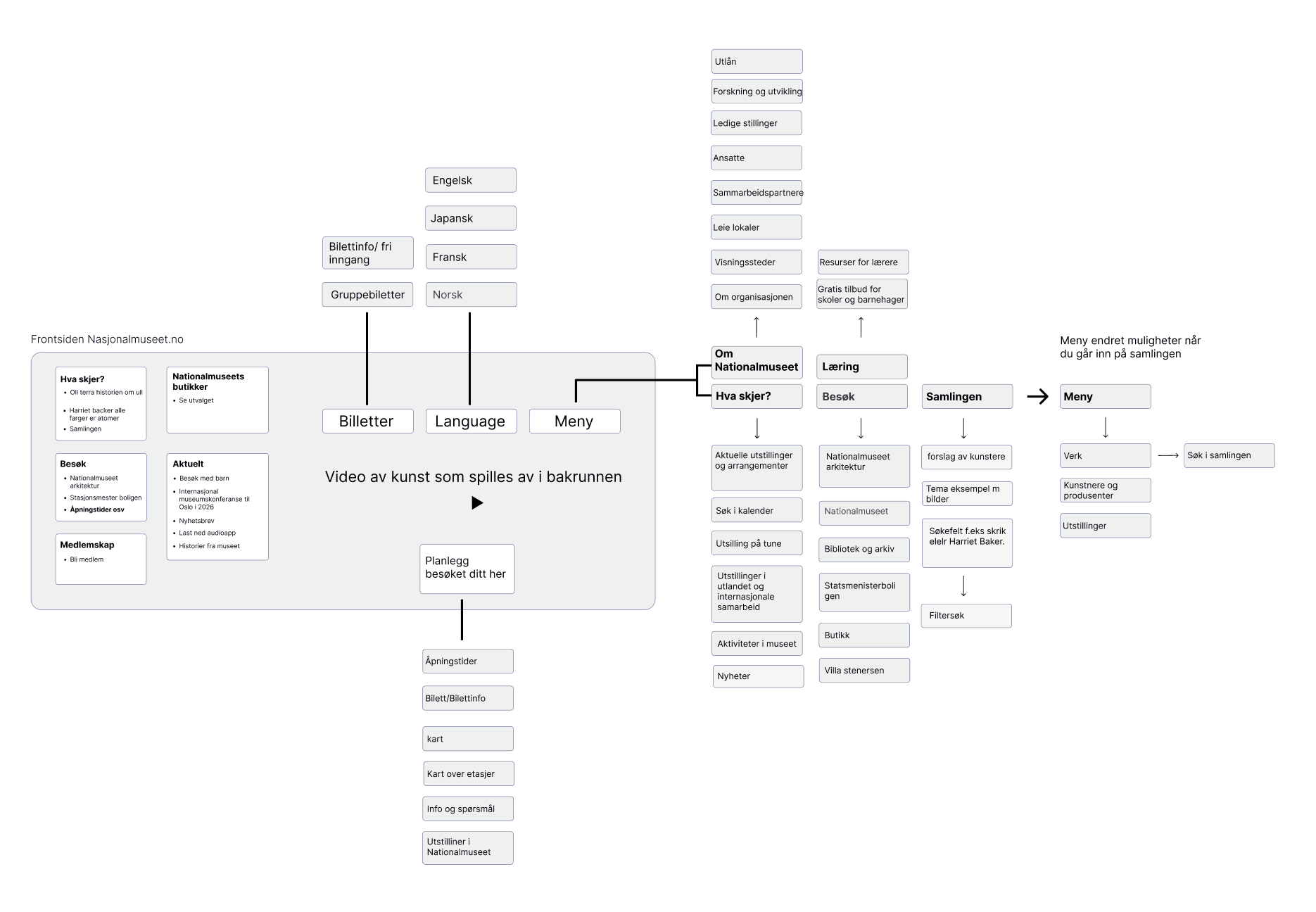
Sitemap

Sitemap

Prioritization of opening hours
based on the Tree Jack test

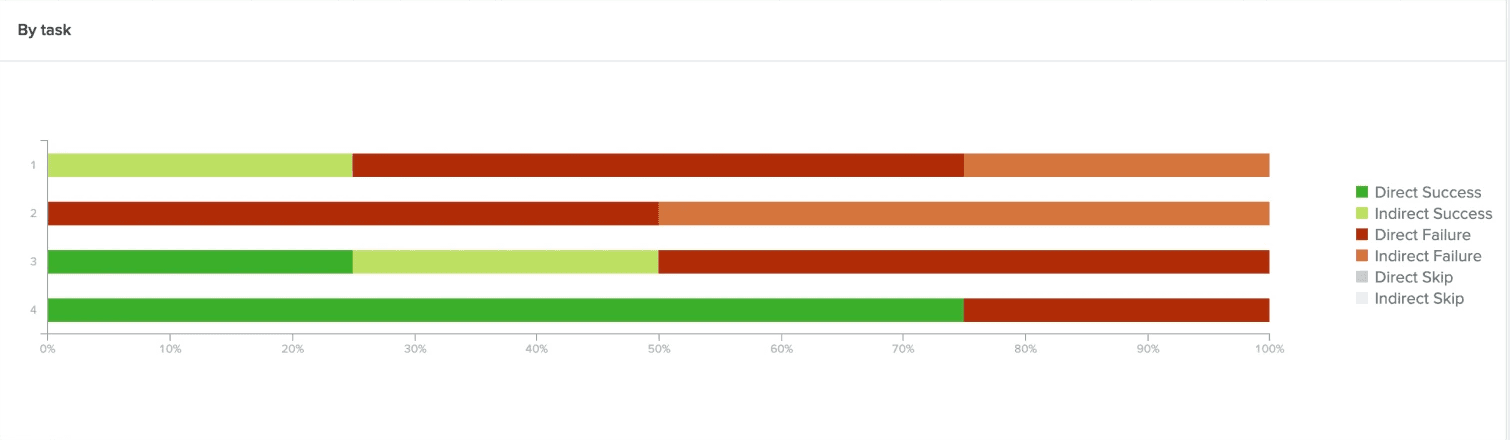
The Tree Jack test

The results from the Tree Jack test show that question 2, “Where can you find the opening hours of the National Museum?”, stands out as a challenge for users. Although the information is available by scrolling down the website, the test revealed that its placement is not intuitive enough.

Based on this insight, I have chosen to prioritize the visibility of the opening hours by placing this information clearly on the front page after the user clicks on “Opening Hours” (eliminating the need to scroll). By doing so, we ensure that users can quickly and easily find important information, which contributes to a better user experience.


Recommend adding a dedicated opening hours button to the navigation menu


Recommend adding a dedicated opening hours button to the navigation menu

Suggestions for improving the search
functionality in “The Collection”

Suggestions for improving the search
functionality in “The Collection”

Improving the filtering functionality in “The Collection”

The user survey revealed that the filter button in “The Collection” is perceived as somewhat hidden and not intuitively placed. When users navigate into “The Collection,” the menu changes to display a search field, but the filter function does not appear clearly accessible.

To address this, I chose to add the words “search in filter” directly on the button. The goal of this change is to improve navigation and accessibility within “The Collection,” enabling users to find relevant content more quickly.

Furthermore, it was revealed that the current search engine does not handle spelling errors. It is therefore recommended to improve the search engine’s ability to correct misspellings and provide relevant results, even when minor errors occur.
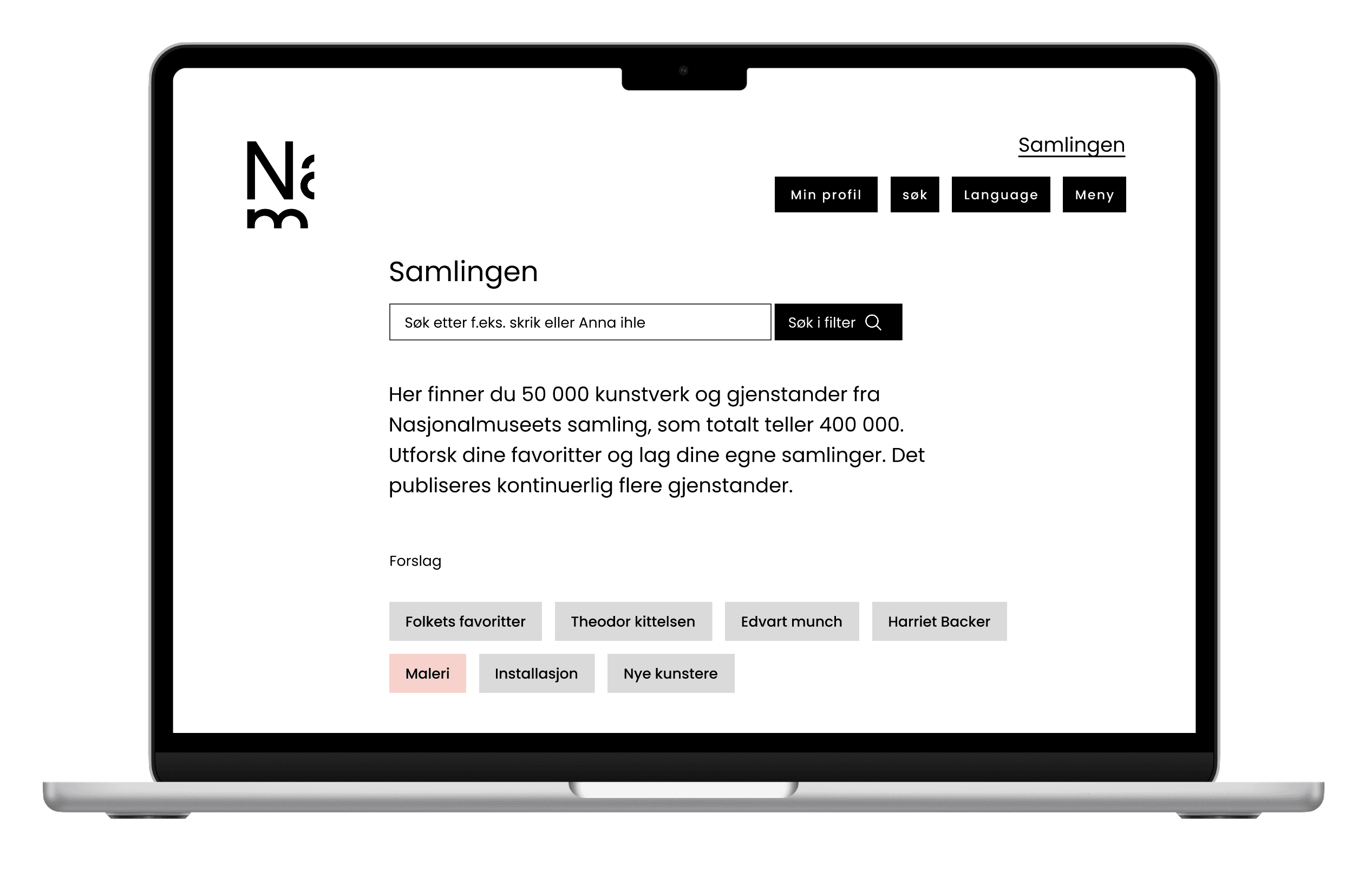
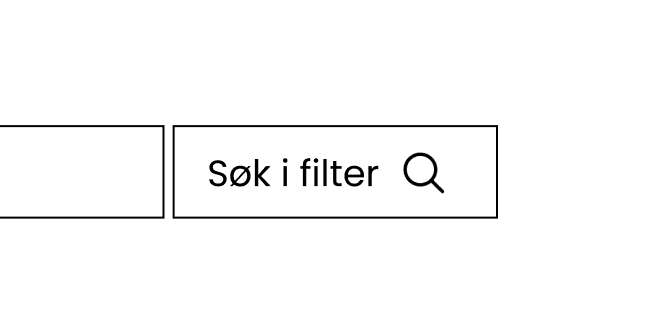


Jeg valgte å legge til teksten “Søk i filter” direkte på knappen


Jeg valgte å legge til teksten “Søk i filter” direkte på knappen

Suggested placing the text “Search in filter” directly on the button to make the function clearer to the user.

Card sort testing – The Collection

Card sort testing – The Collection

Main-goal
To understand how users naturally organize the content in “The Collection” in order to improve categorization, navigation, and information flow.

Sub-goals
Identify how users group artworks (e.g., by artists, eras, or themes).Determine which terms or categories users find intuitive.

User-testing
I conducted card sorting with both art experts and beginners to gain a broad understanding of how different user groups think about organizing artworks. This provided insight into which categories felt natural and which appeared unclear or artificial.

By combining quantitative and qualitative findings, I was able to identify patterns in users’ sorting behavior and propose measures that support both experts and first-time visitors in their exploration of the collection.

User-testing
I conducted card sorting with both art experts and beginners to gain a broad understanding of how different user groups think about organizing artworks. This provided insight into which categories felt natural and which appeared unclear or artificial.


Simplifying navigation
based on the Card Sort testing

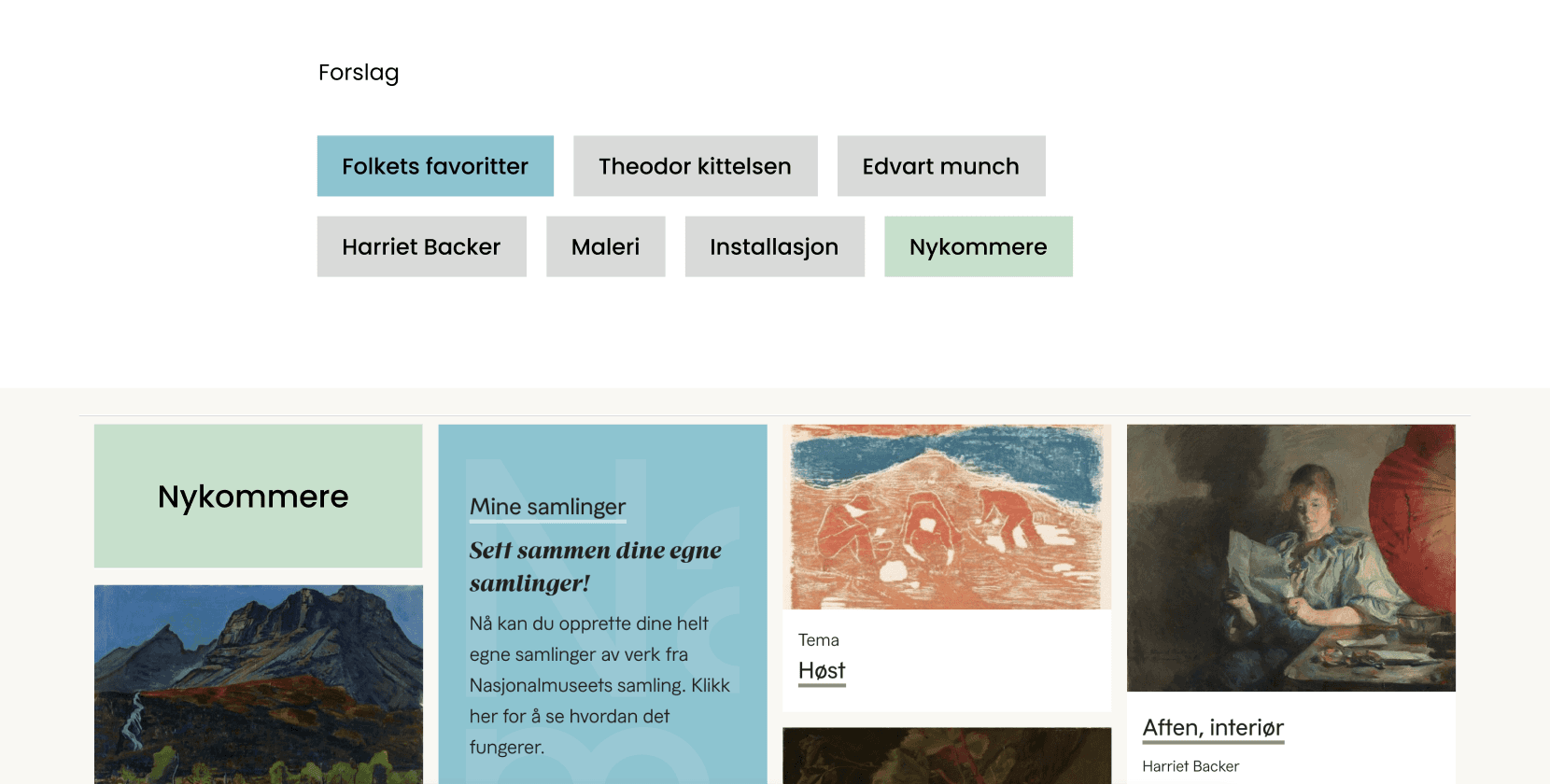
The Card Sort testing shows that simple and intuitive navigation works best for users. To address this, it is suggested to implement buttons such as “Public Favorites” and “New Artists” to help beginners explore “The Collection” without prior knowledge. These buttons make the experience more inclusive and inspire exploration among a broader audience.

By combining quantitative and qualitative findings, I was able to identify patterns in users’ sorting behavior and propose measures that support both experts and first-time visitors in their exploration of the collection.

As a proposed improvement, I implemented buttons such as “Public Favorites” and “New Artists” to make the navigation more intuitive and inclusive.
Key takeaways


Make navigation elements more intuitiv

Adding “Search & Filter” to the button clarifies its purpose and lowers the barrier for users looking for filtering options.

Prioritize visibility of essential information

Moving the opening hours to a clearly accessible location improves the overall user experience and reduces unnecessary navigation.

Improve search functionality with error tolerance

Implementing spelling-error correction will provide more relevant results and enhance usability.

Design categories that work for both experts and beginners

Insights from the Card Sorting test show that broad, intuitive categories form a strong foundation for information architecture.

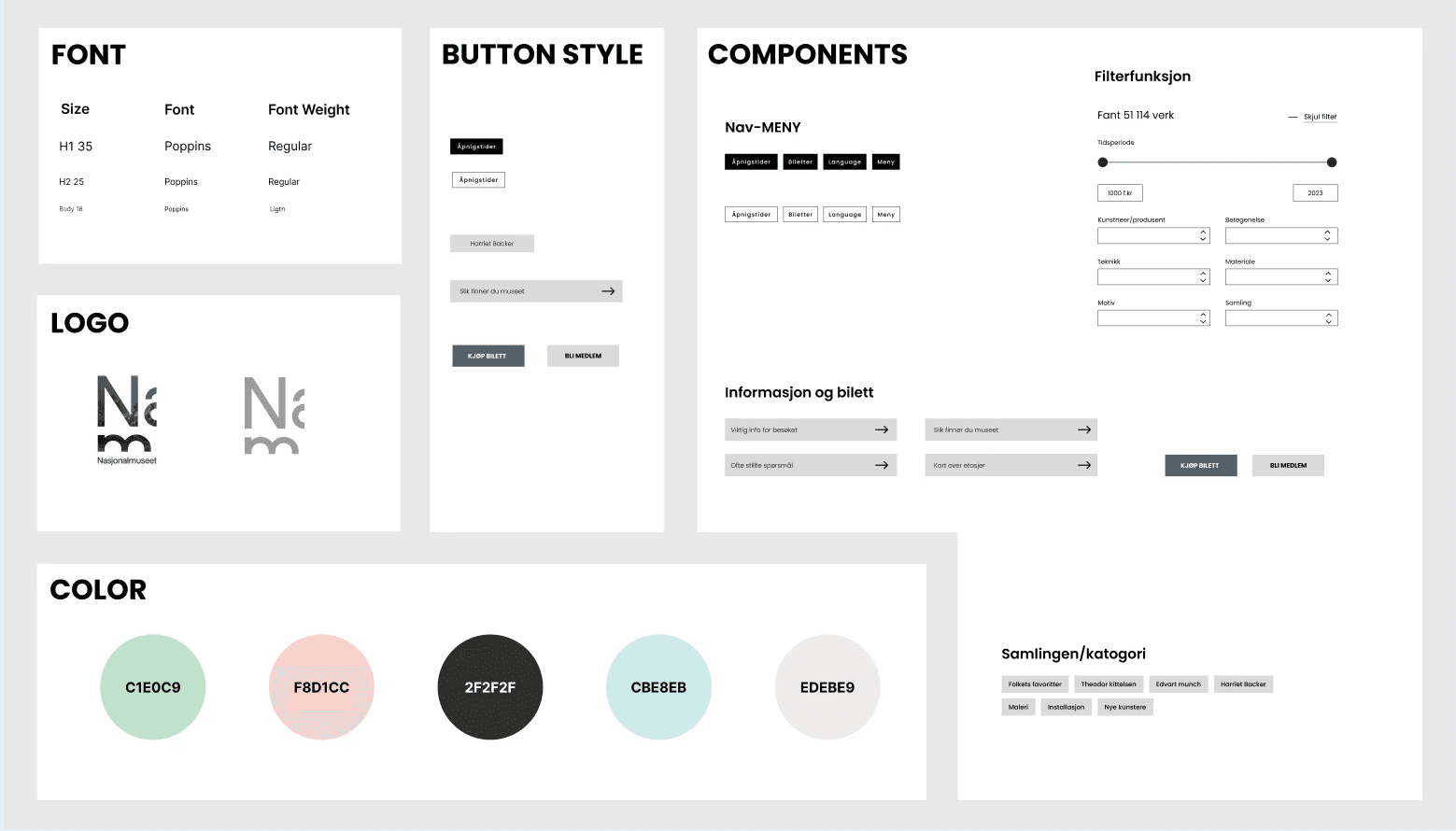
Styleguide - Figma

Styleguide - Figma

The National Museum Oslo

The National Museum Oslo


Information architecture

Period: 3 weeks - 2024

UX and Information Architecture

In this project, I analyzed an existing website to identify areas for improvement and propose a more user-friendly structure. The project was developed as a school assignment in collaboration with the National Museum in Oslo.